Are you selling products to German customers, storing goods in Germany, or using Amazon FBA, Pan-EU or another fulfilment network?

Brenda Varela
Last Updated on 26 June 2026Then VAT registration in Germany may be required. For online sellers, the most important trigger is usually stock storage in Germany. If your products are stored in a German warehouse, for example through Amazon FBA, Pan-EU, CEE or another fulfilment provider, you normally need a German VAT number and must file German VAT returns.
Pure cross-border distance sales are different. If you sell from one EU country to German private customers and do not store goods in Germany, you may be able to report German VAT through the One-Stop Shop (OSS) instead of registering locally.
hellotax helps online sellers understand when German VAT registration is needed and what the correct setup should be for Amazon, Shopify, and other e-commerce sales channels. Contact our team at hellotax for a free consultation on VAT registration, Returns, or communication with local authorities – we assist with all VAT duties that might arise.

Book a free consultation
Our VAT experts are happy to help you. Book a free consultation today!
When do I need a VAT registration in Germany?
You usually need VAT registration in Germany if your business has a local VAT obligation there. For e-commerce sellers, this often happens because of stock storage, fulfillment activity, or sales that cannot be fully reported through OSS.
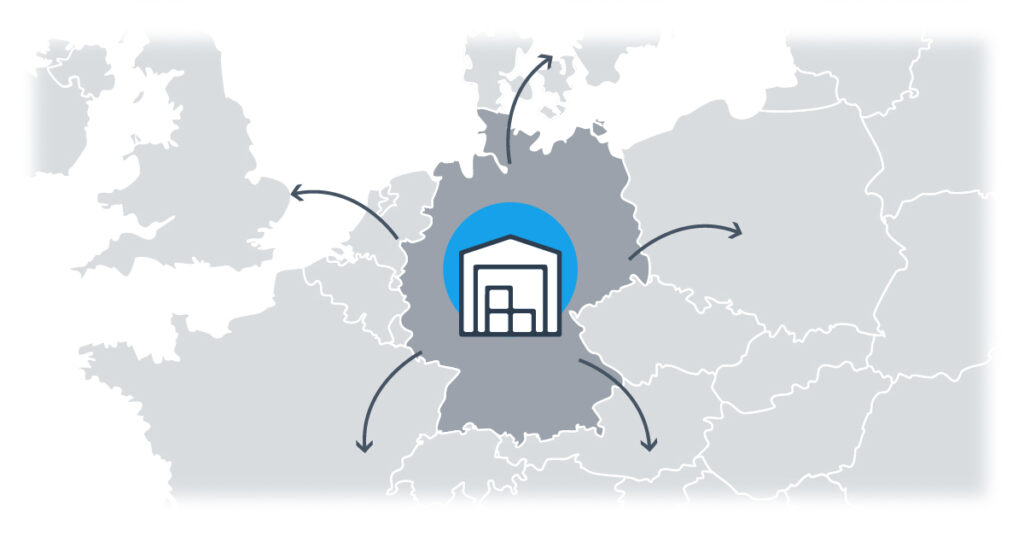
You are storing goods in Germany
If you store goods in Germany, German VAT registration is normally required. This applies whether you use your own warehouse, a third-party fulfilment provider, Amazon FBA, Pan-EU, CEE or another logistics setup.
Storage creates a local VAT obligation because your goods are physically located in Germany before they are sold. Sales from German stock to German customers must usually be reported in a German VAT return.
This is one of the most common reasons why Amazon sellers need VAT registration in Germany.
You sell goods to German customers and exceed the EU-wide €10,000 threshold
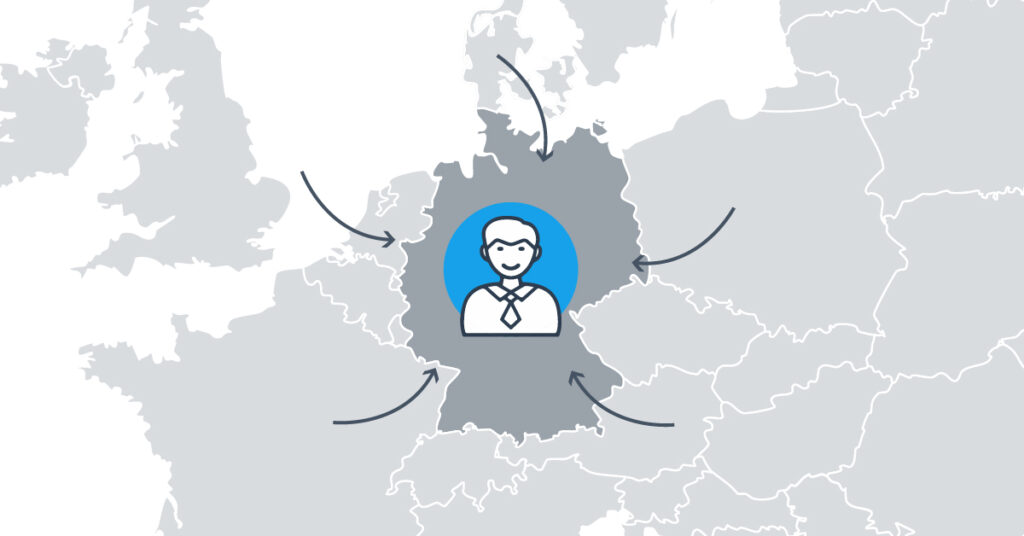
For EU-based sellers, the old country-specific distance-selling thresholds were replaced by one EU-wide threshold of €10,000. This threshold applies to total cross-border B2C distance sales and certain digital services across the EU, not only to sales made to Germany.
If your cross-border B2C sales stay below €10,000 per year, you may usually charge VAT in your home country, as long as you do not store goods in Germany.
Once you exceed the €10,000 threshold, VAT is generally due in the customer’s country. For sales to German private customers, this means German VAT rates apply.
However, exceeding the threshold does not always mean that you need a separate VAT registration in Germany. If you use the One-Stop Shop (OSS) and only make eligible cross-border B2C distance sales, you can usually declare German VAT through OSS instead.
Important: OSS does not replace German VAT registration if you store goods in Germany.
You use Amazon FBA, Pan-EU or another fulfilment programme
If you participate in Amazon FBA, Pan-EU or another fulfilment programme that allows your goods to be stored in Germany, VAT registration in Germany is normally required.
This applies even if your business is not established in Germany. If Amazon or another fulfilment provider moves your stock into a German warehouse, your business can become liable for German VAT registration, German VAT returns and local VAT reporting.
For this reason, online sellers should always check where their stock is stored, not only where their customers are located.
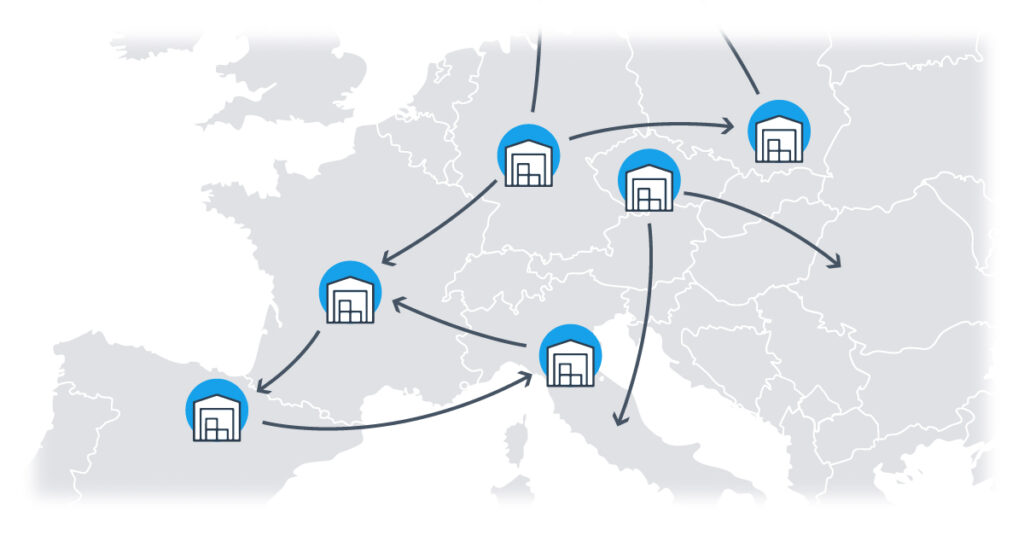
Need help understanding whether you need VAT registration in Germany, OSS reporting, or both? hellotax can help you review your sales channels, storage countries and VAT setup. Book a free consultation and get clear guidance on your German VAT obligations.
Book a free consultation
Our VAT experts are happy to help you. Book a free consultation today!
What information is required for the VAT registration in Germany?
By reaching or overstepping the VAT threshold or storing goods within the German borders, a German VAT ID becomes mandatory. To avoid trouble with the German tax system, you should take care of this matter as early as possible and apply for a VAT registration in Germany.
For the application of a VAT ID in Germany, you have to contact your local office of the “Finanzamt”, that is what the German tax office is called. Simply find your local Finanzamt online and apply either online or by mail, or simply in the hellotax VAT software.
Additionally, the following documents need to be submitted:
- Home VAT certificate of the sole trader (dated not more than 6 months)
- Official Company registration certificate (must be issued within the last 6 months)
- Official Company certificate confirming the current company directors (must be issued within the last 6 months)
- An extract from the company’s national trade register
- Proof of the planned business (e.g., contracts or bills)
Please note: Some of the documents must be translated into German by a sworn translator and certified by a sworn notary! Once you have completed your registration, you will receive a German VAT number.
What is the format of the VAT registration number in Germany?
| Name | Umsatzsteuer-Identifikationsnummer (USt.-IdNr.) / Umsatzsteuernummer |
| Country Code | DE |
| Format | DE + 9 digits |
| Example | DE123456789 |
Register in time to avoid problems with the German tax authorities or fines. You can make your VAT registration in Germany easier by using our hellotax VAT automation tool. Further, you can automate VAT payments, VAT returns, and correspondence with the authorities. Check it out now!
Book a free consultation
Our VAT experts are happy to help you. Book a free consultation today!
Distance Selling to Germany and the EU-wide threshold
The EU-wide €10,000 threshold is important for online sellers, but it is often misunderstood.
The threshold applies to total cross-border B2C distance sales and certain digital services across the EU. It is not a separate German threshold. For example, sales to Germany, France, Spain, and other EU countries are counted together.
If your EU-based business stays below the €10,000 threshold, cross-border B2C sales may usually remain taxable in your home country, provided you do not store goods in Germany or another destination country.
If your business exceeds the €10,000 threshold, VAT is normally due in the customer’s country. For sales to private customers in Germany, this means German VAT rates apply.
But this does not automatically mean that local VAT registration in Germany is required. If your sales qualify for OSS and your goods are not stored in Germany, you may be able to declare German VAT through OSS instead of filing a local German VAT return.
Example:
An Italian online seller ships products from Italy to private customers in Germany, France, and Spain. The seller has no stock in Germany. Once the seller exceeds the EU-wide €10,000 threshold, German VAT must be charged on sales to German customers. However, the seller may be able to report this German VAT through the Italian OSS return instead of registering for VAT in Germany.
Different example:
The same seller uses Amazon Pan-EU, and goods are stored in Germany. In this case, OSS is not enough for all German VAT obligations. The seller normally needs VAT registration in Germany because stock is held locally.
What happens if I participate in the OSS Program?
The One-Stop Shop (OSS) is a VAT simplification scheme for eligible cross-border B2C sales within the EU.
Instead of registering for VAT in every EU country where you sell to private customers, OSS allows you to declare and pay VAT through one OSS return in your country of registration. The VAT is then distributed to the relevant EU countries.
For example, if an Italian seller ships goods from Italy to private customers in Germany, France and Spain, the seller can usually report those sales through the Italian OSS return. German VAT still applies to sales made to German customers, but the seller may not need a separate German VAT registration if there is no stock in Germany.
However, OSS does not cover all transactions.
You usually still need VAT registration in Germany if:
- You store goods in Germany
- You sell goods from German stock to German customers
- You move stock into or out of Germany
- You use Amazon FBA, Pan-EU, CEE or another fulfilment setup that stores inventory in Germany
- You make local German sales that cannot be reported through OSS
This is why many Amazon sellers need both OSS and local VAT registrations. OSS can simplify cross-border B2C reporting, but it does not remove local VAT obligations created by storage.
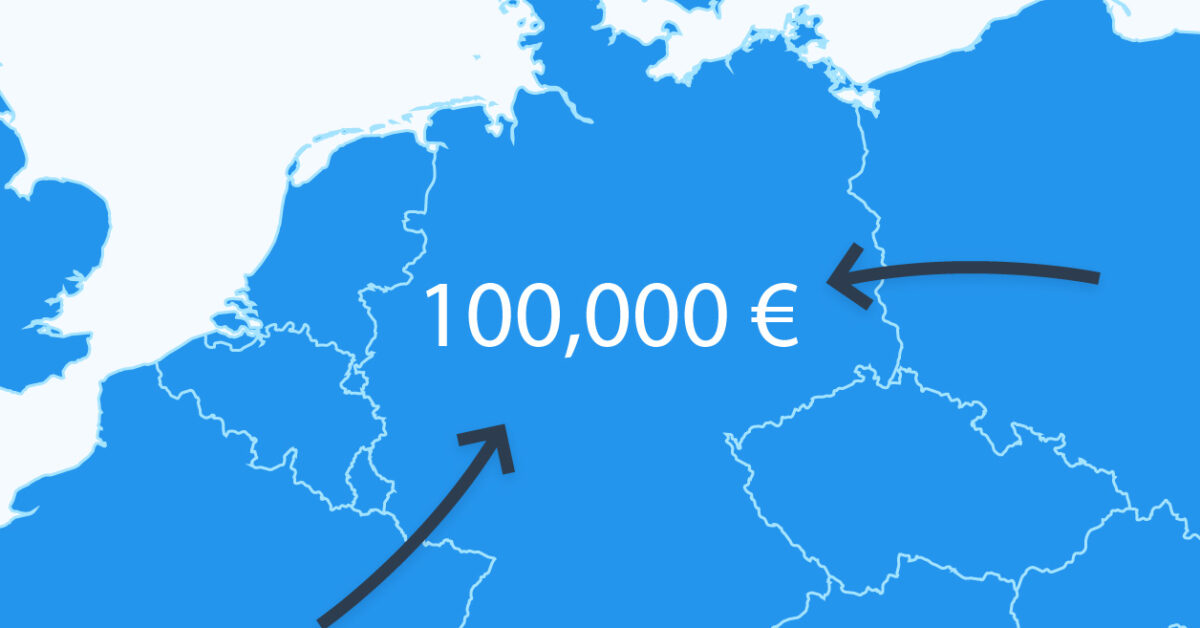
From 1 January 2025, the EU also introduced a cross-border SME scheme for eligible small EU-established businesses. This scheme can allow VAT exemption in certain cases, but only if strict EU and national turnover limits are respected. The EU-wide annual turnover limit is €100,000, and the seller must also respect the national thresholds of the countries where the exemption is used. For most Amazon FBA and Pan-EU sellers storing goods in Germany, this scheme will not replace the need to check German VAT registration obligations.
Want to stay VAT compliant? hellotax can help you with all kinds of VAT questions. We can take care of your registration for VAT in Germany or OSS, with regular VAT returns, and more. Contact us today, choose the best option for your business, and avoid fines.
Book a free consultation
Our VAT experts are happy to help you. Book a free consultation today!
New German e-invoicing and digital compliance rules
Germany is moving further towards digital VAT compliance. From 1 January 2025, mandatory e-invoicing rules started to apply progressively for many domestic B2B transactions in Germany. Businesses must be able to receive compliant e-invoices from 2025, with further transitional rules for issuing e-invoices.
For most e-commerce sellers, the practical impact depends on the type of sales they make. Standard B2C marketplace sales to private customers are not the main focus of the German B2B e-invoicing rules.
However, sellers with German business customers, German entities, local operations, or German point-of-sale activity should review whether additional invoicing or reporting obligations apply.
If you operate a local shop or point-of-sale in Germany alongside your e-commerce business, German cash register and reporting rules may also become relevant.
Because Germany’s VAT and digital reporting rules are evolving, online sellers should make sure their VAT registration, invoicing setup and VAT return process are aligned with their actual sales channels.
If you wish to find out more directly from the official source, check here for access to the Federal tax office.
If you are unsure how German VAT applies to your business, it helps to first understand the general rules for VAT in Germany, including the standard and reduced VAT rates. For sellers shipping goods to customers in several EU countries, the One-Stop Shop can simplify cross-border VAT reporting, but it does not replace local VAT registration when stock is stored in Germany. This is especially important for Amazon FBA and Pan-EU sellers, because German warehouse storage can create a local VAT obligation even if OSS is already being used.
FAQ – VAT Registration in Germany
Which VAT rates are there in Germany?
In Germany, the standard VAT rate is 19% and it applies to most goods and services sold in Germany. There is also a reduced rate of 7%, which applies for example to books or water supplies. Under certain conditions, a 0% VAT rate can also apply. When you complete your VAT registration in Germany, these rates will determine how you charge VAT on your sales.
When and how often do I need to file VAT returns in Germany?
Once you have completed your VAT registration in Germany, the frequency of your VAT returns depends on your annual turnover and VAT liability. Filing periods can be monthly, quarterly or annually. In many cases, new registrations start with monthly returns. It’s best to clarify with your tax advisor or with hellotax which filing scheme applies to you based on your current German VAT position.
How long does it take to get a German VAT number?
After all the required documents are submitted and the VAT registration in Germany is processed by the tax office, it usually takes around 8–12 weeks until you receive your German VAT number. Processing times can vary depending on the workload of the Finanzamt and whether additional questions arise, so it’s smart to start registration early.
Do I need VAT registration in Germany if I use the OSS scheme?
If you only make cross-border B2C distance sales from one EU country and do not store goods in Germany, the One-Stop Shop (OSS) may allow you to avoid local VAT registration in Germany. However, as soon as you store inventory in Germany (for example via Amazon FBA or another warehouse), VAT registration in Germany becomes mandatory again, even if you already use OSS. Sales from German stock to German customers must always be reported in a local German VAT return.
Is VAT registration in Germany required if I sell on Amazon (FBA / Pan-EU)?
Yes, in practice most FBA sellers need VAT registration in Germany. If Amazon moves your goods into a German fulfilment centre under FBA, CEE or Pan-EU, you are treated as holding stock in Germany. This creates a local VAT obligation: you must register for VAT in Germany, charge German VAT on local sales, and submit German VAT returns. This applies whether your company is based in the EU, the UK or a non-EU country.
What documents do I need for VAT registration in Germany as an online seller?
For VAT registration in Germany you typically need:
-
A valid home VAT certificate (for EU businesses)
-
Company registration documents and proof of directors
-
An extract from the national trade register
-
A description of your planned activity in Germany (e.g. online sales, FBA storage)
Some documents may need to be translated into German and notarised. Working with a provider like hellotax can simplify this process, as we coordinate the VAT registration in Germany and check that the documentation meets the Finanzamt’s requirements.
What happens if I don’t complete VAT registration in Germany in time?
If you are required to complete VAT registration in Germany (for example, because you store goods there or exceed the distance-selling threshold) but delay or skip the registration, the German tax office can:
-
Assess backdated VAT on your sales
-
Charge interest and late-filing penalties
-
Increase the risk of an audit
For marketplace sellers, platforms like Amazon may also request proof of German VAT registration and can restrict your account if you are not compliant. Registering early and keeping up with German VAT returns is the safest way to avoid these issues.
Check out our complete guide on VAT in Germany here.
Need help with VAT registration in Germany?
If you sell through Amazon, Shopify or another ecommerce channel, hellotax can help you understand whether you need VAT registration in Germany, OSS reporting, or both. Book a free consultation and get practical guidance on your next steps for German VAT compliance.
Book a free consultation
Our VAT experts are happy to help you. Book a free consultation today!